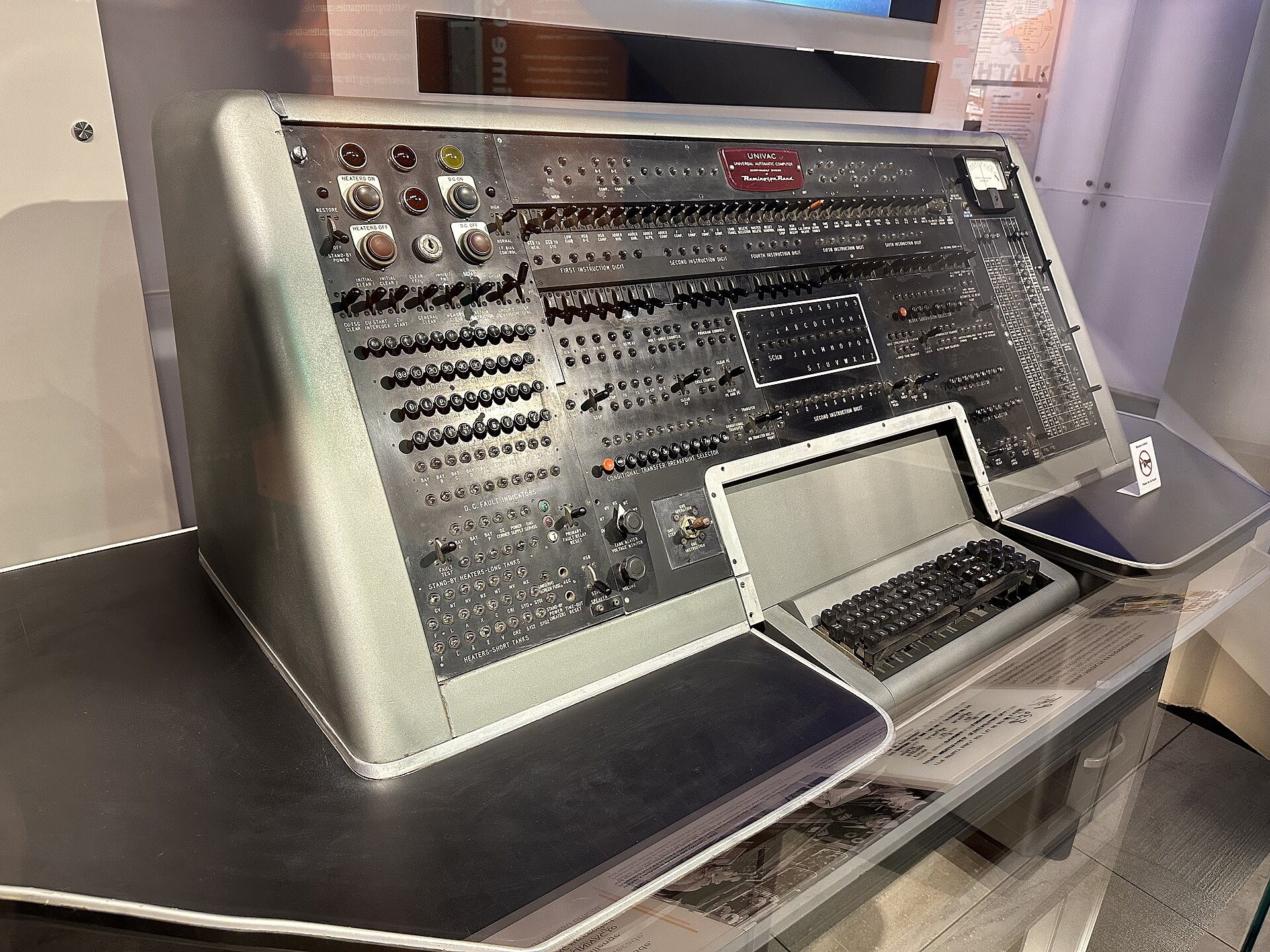
MARCH 31, 1951 — REMINGTON RAND DELIVERS THE FIRST UNIVAC I COMPUTER TO THE UNITED STATES CENSUS BUREAU
First Light
The Machine That Remembered
In 1951, the United States was suffocating under the weight of its own population data. The Census Bureau was drowning in millions of punch cards, processed by armies of human computers working manual tabulators. The scale of modern society had surpassed the mechanical tools designed to measure it.
Information was no longer just a record; it was a physical, insurmountable burden.
The Arrival
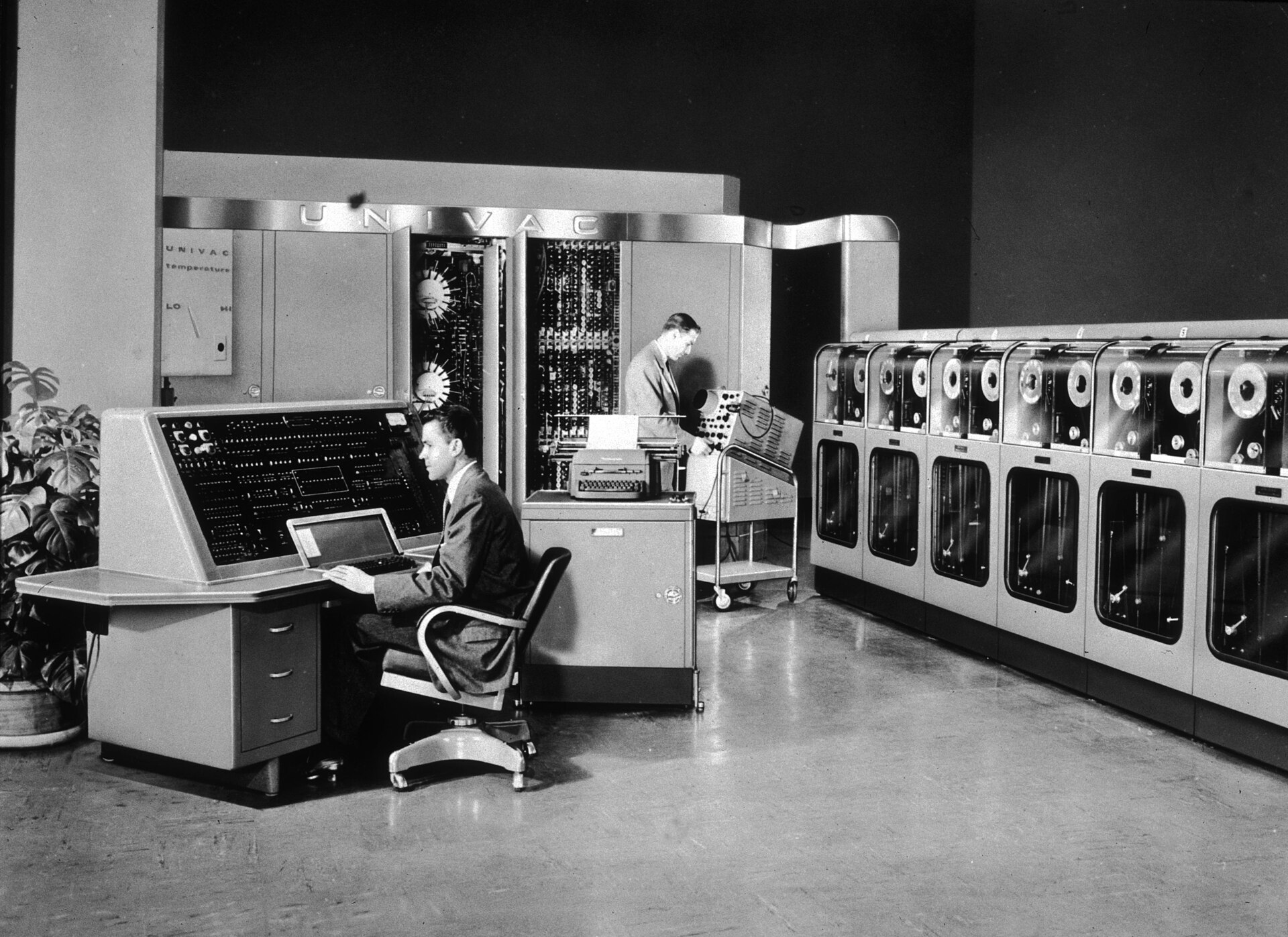
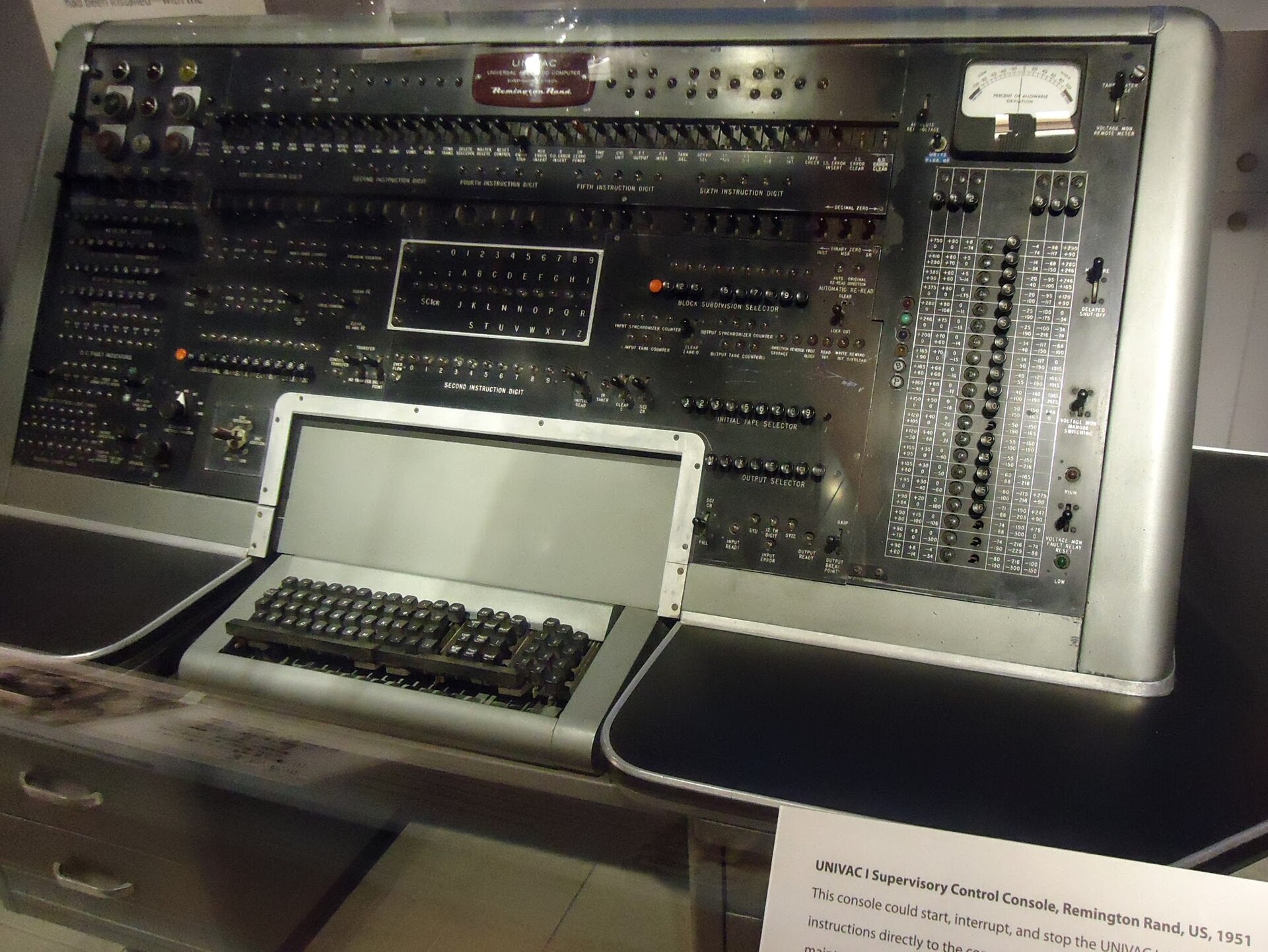
On March 31, 1951, a threshold was crossed. Through the doors of the Census Bureau rolled a machine unlike any before it. This was not merely a new calculating tool. It was the UNIVAC I—the Universal Automatic Computer. It possessed something previous industrial machines lacked: electronic memory and sequential execution.
The machine was a room. You walked into its architecture, and you felt the profound heat of its thinking.
The Paradigm Shift
Dawn State
Numbers dissolved from heavy paper ledgers into imperceptible pulses of electricity. The UNIVAC I read data from metallic magnetic tape, untethering computation from the physical limitations of punched holes. It sparked a chain reaction that digitized administration, commerce, and eventually, human interaction itself.
Today's vast constellations of invisible data, the cloud, the algorithmic frameworks that govern modern life—all trace their lineage back to this monolithic, amber-lit dawn in 1951.