One Way Voyage
The Ship That Became a Bomb
The Leviathan's Shadow
In the early years of the war, the Atlantic lifeline hung in the balance. The German battleship Tirpitz, a steel leviathan waiting in the Norwegian fjords, threatened to sever the convoy routes that kept Britain breathing. If she broke out into the mid-ocean lanes, the tonnage lost would be catastrophic.
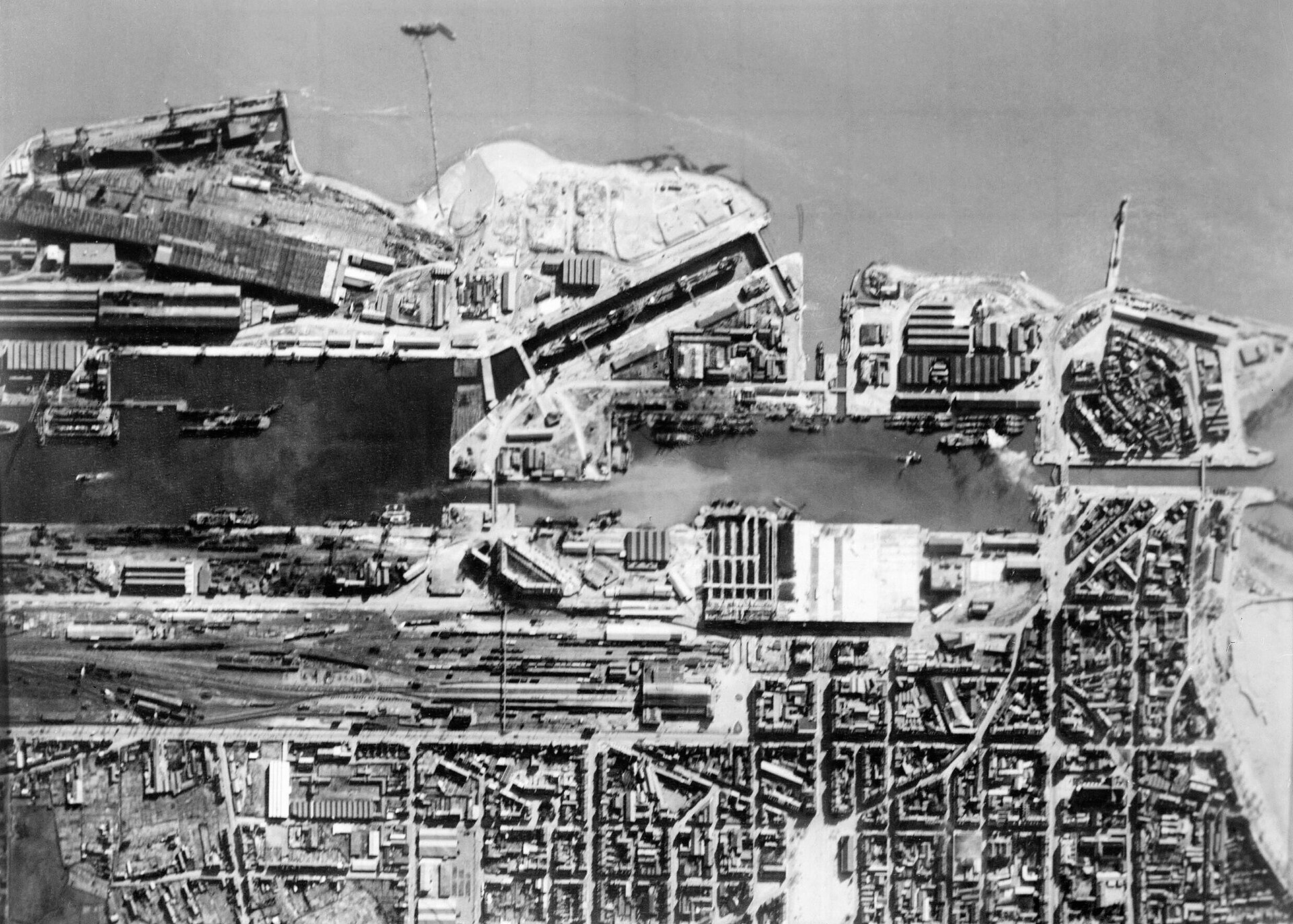
The Admiralty knew they could not sink her in a straight fight. Instead, they targeted her only refuge. There was precisely one facility on the entire Atlantic coast capable of housing and repairing a vessel of her immense displacement.
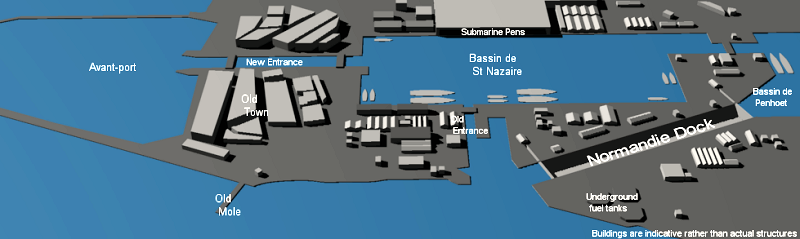
The Objective: Louis Joubert Lock
The Asset: HMS Campbeltown
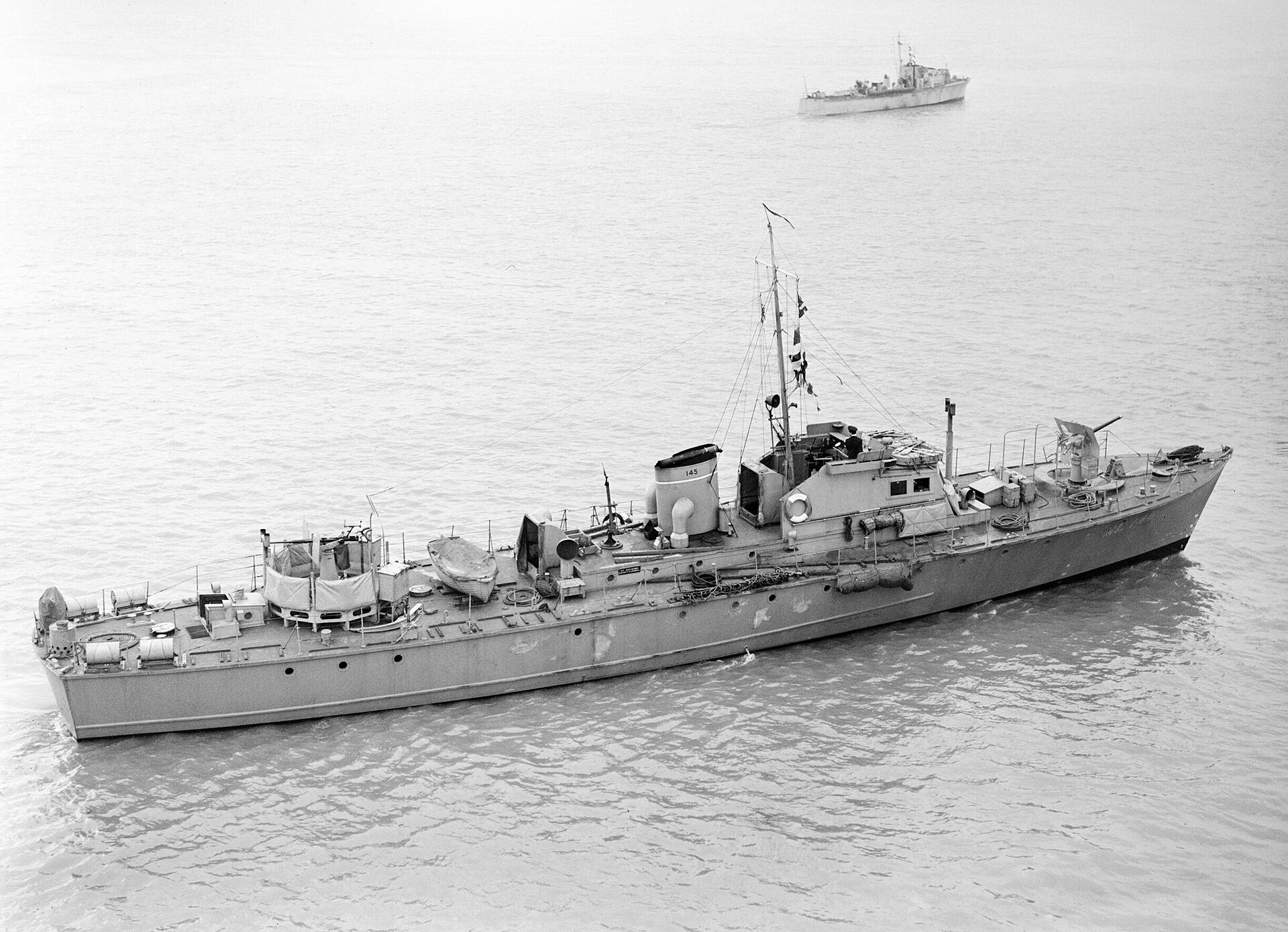
Operation Chariot required a sacrificial pawn. Enter HMS Campbeltown, an obsolete American-built destroyer lent to the Royal Navy. She was stripped down, lightened, and visually modified to resemble a German Möwe-class torpedo boat in a desperate bid to buy time under the estuary searchlights.
Her true purpose was concealed deep within her bow. Encased in concrete to ensure the blast directed forward, engineers packed the ship with massive explosive charges wired to delayed-action pencil fuses. She was no longer a ship; she was a 1,200-ton delivery system for a bomb.
The Long Approach
The flotilla navigated the treacherous Loire estuary under the cover of a moonless night. The deception held until 01:22 AM, when massive coastal searchlights suddenly snapped on, piercing the darkness and pinning the unarmored wooden motor launches against the black water.
The ruse had failed. Every coastal battery on both shores opened fire, turning the river into a blinding cauldron of green and red tracers. Water geysered around the flotilla as heavy artillery found the range. Commander Robert Ryder ordered Campbeltown to accelerate, absorbing punishing, point-blank hits as the helmsman steered directly into the glare of the guns.
The Impact
With a grinding, metallic roar that echoed over the gunfire, Campbeltown slammed head-on into the massive caisson gate at 19 knots. Thirty-six feet of her bow crumpled, embedding the ship irrevocably into the steel structure, exactly as calculated.
Immediately, commandos swarmed ashore into the teeth of heavy German machine-gun fire. They raced across the exposed docks, planting charges to systematically destroy the pump houses and winding machinery. The raid was brutally effective and casualties were severe. But the mission's primary weapon—deep inside the crumpled bow of the destroyer—remained dormant, silently counting down.
The Echo
Morning broke over a scene of devastation. The raid was over, the surviving British forces were captured or killed, and senior German officers had gathered on the deck of the curious, wrecked destroyer wedged in their lock.
Then, the delayed-action fuses finally expired.
The four-and-a-half tons of explosive detonated in a contained, catastrophic flash. The resulting shockwave obliterated the massive dock gates, tore the Campbeltown in half, and sent a wall of water surging into the dry dock. The lock was permanently disabled for the remainder of the war. The Tirpitz never entered the Atlantic. The men of Operation Chariot proved that victory is sometimes measured not in territory captured, but in disasters averted.