Through the
Handmade Glass
In a modest workshop illuminated by flickering tallow candles, Christiaan Huygens and his brother Constantijn painstakingly polish glass. The world is small, the room is warm, but the instrument they craft is destined for the vast, freezing dark. Their twelve-foot focal length telescope, entirely their own creation, represents an unprecedented leap in optical clarity.
When Christiaan finally lifts the heavy brass tube toward the winter sky, he is not merely looking at the stars; he is reaching across an unimaginable void, hoping to pierce a silence that has reigned for nearly half a century.
Since Galileo first laid eyes upon the four attendants of Jupiter in 1610, the heavens had offered no new companions to the wandering stars. For forty-five years, astronomers stared into blurred, chromatic abysses, their inferior lenses unable to resolve the profound mysteries lurking at the edge of the known solar system.
The Ringed Giant
& The Shadow
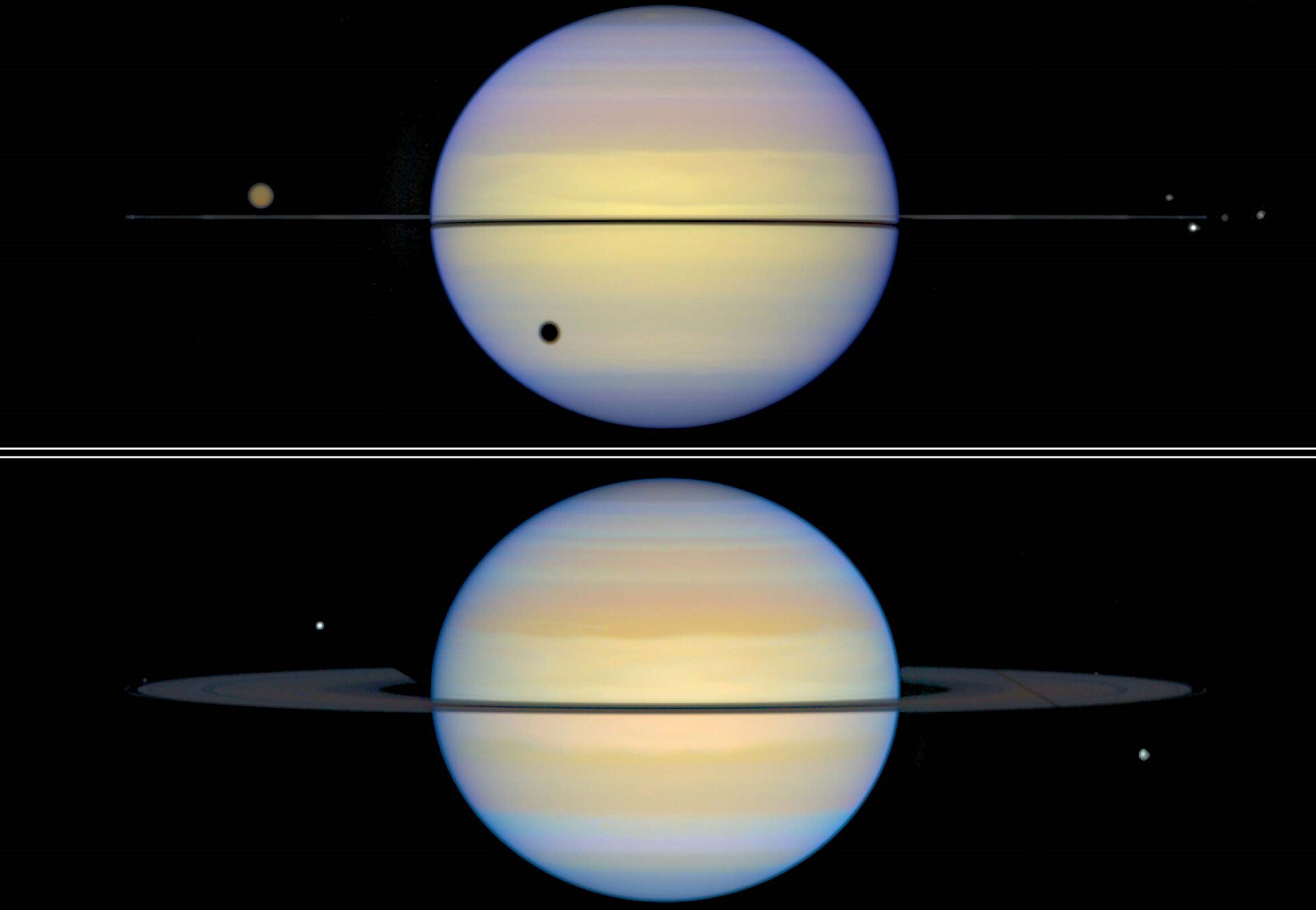
Through the pristine optics of the Huygens lens, Saturn was suddenly reborn. It was no longer the bizarre, tri-form anomaly that had so confounded Galileo. Instead, Christiaan beheld a sphere encircled by a breathtakingly thin, flat ring, entirely detached from the planet's body. It was a revelation of architectural precision in the heavens.
Yet, as his eye adjusted to the chiaroscuro of deep space, another detail emerged. A solitary, hazy amber point held steady amidst the drifting background starfield. Over consecutive nights of rigorous observation, its path betrayed its true nature. This was no distant sun. It was a world in its own right, locked in an eternal dance with the ringed giant.
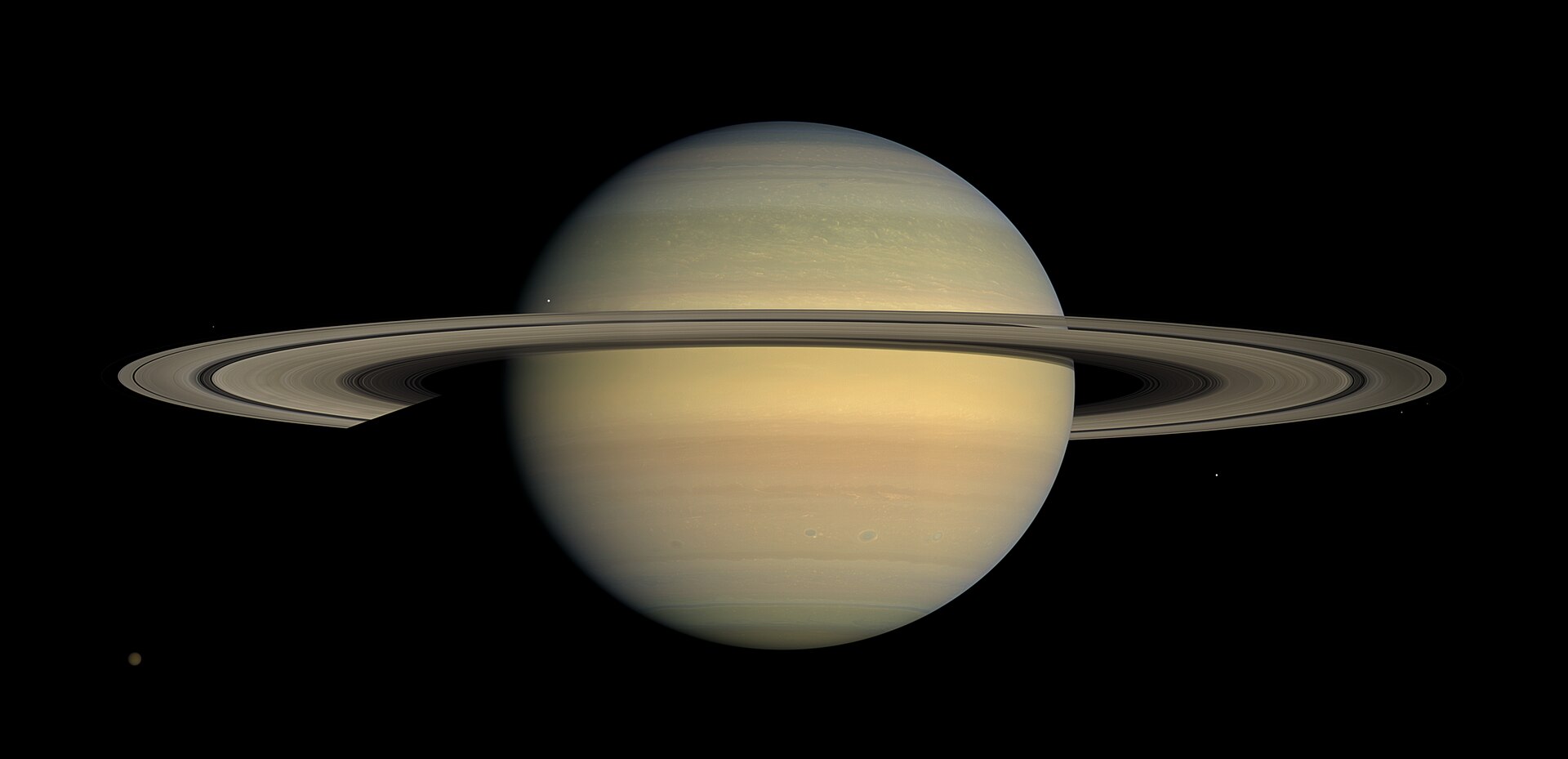
“Annulo cingitur, tenui, plano, nusquam cohaerente, ad eclipticam inclinato.”
With these carefully chosen Latin words, Huygens documented the true nature of Saturn's rings and quietly cataloged the first moon discovered orbiting another planet in nearly half a century. Titan, wrapped in its thick, primordial haze, had finally been drawn from the shadows into the annals of human knowledge.
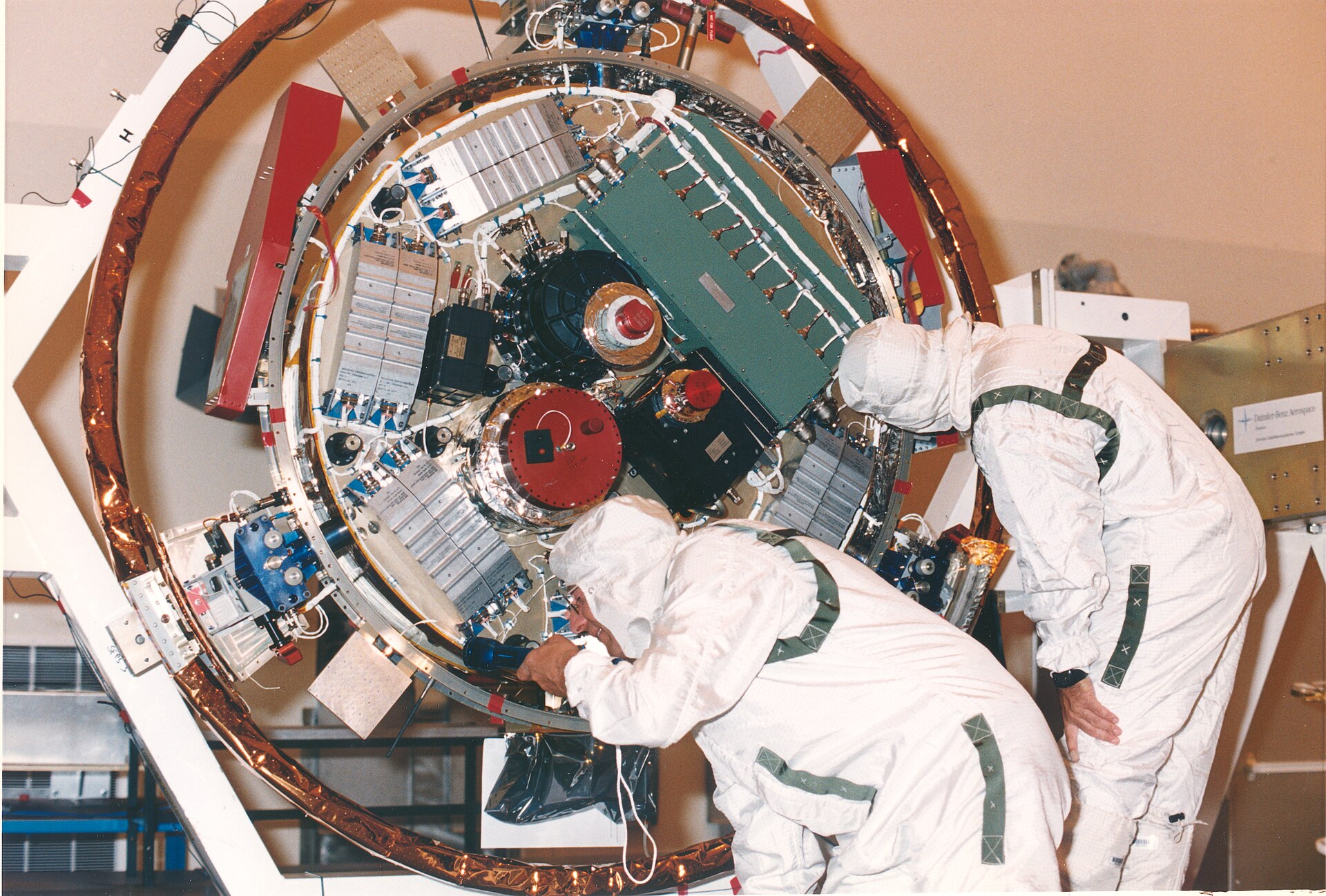
Centuries later, humanity would return the gaze. The Huygens probe, bearing the astronomer's name, would pierce that same amber haze, parachuting into the freezing, methane-soaked atmosphere of Titan to touch the surface he could only dream of from his candlelit room in The Hague.