La Première
Lumière
For millennia, time was an absolute forward-moving stream. Moments flared and vanished forever. But on March 19, 1895, the stream was paused. The Lumière brothers accomplished the impossible: they bottled a fragment of life, creating a window through which we can forever peer into a Tuesday morning in Lyon.
The Gate Opens
Auguste and Louis Lumière did not merely invent a camera. They patented the cinématographe—an elegant, hand-cranked wooden box that functioned simultaneously as a camera, a printer, and a projector. It was a mechanical eye that breathed light, designed with scientific precision to advance 35mm film at exactly 16 frames per second.
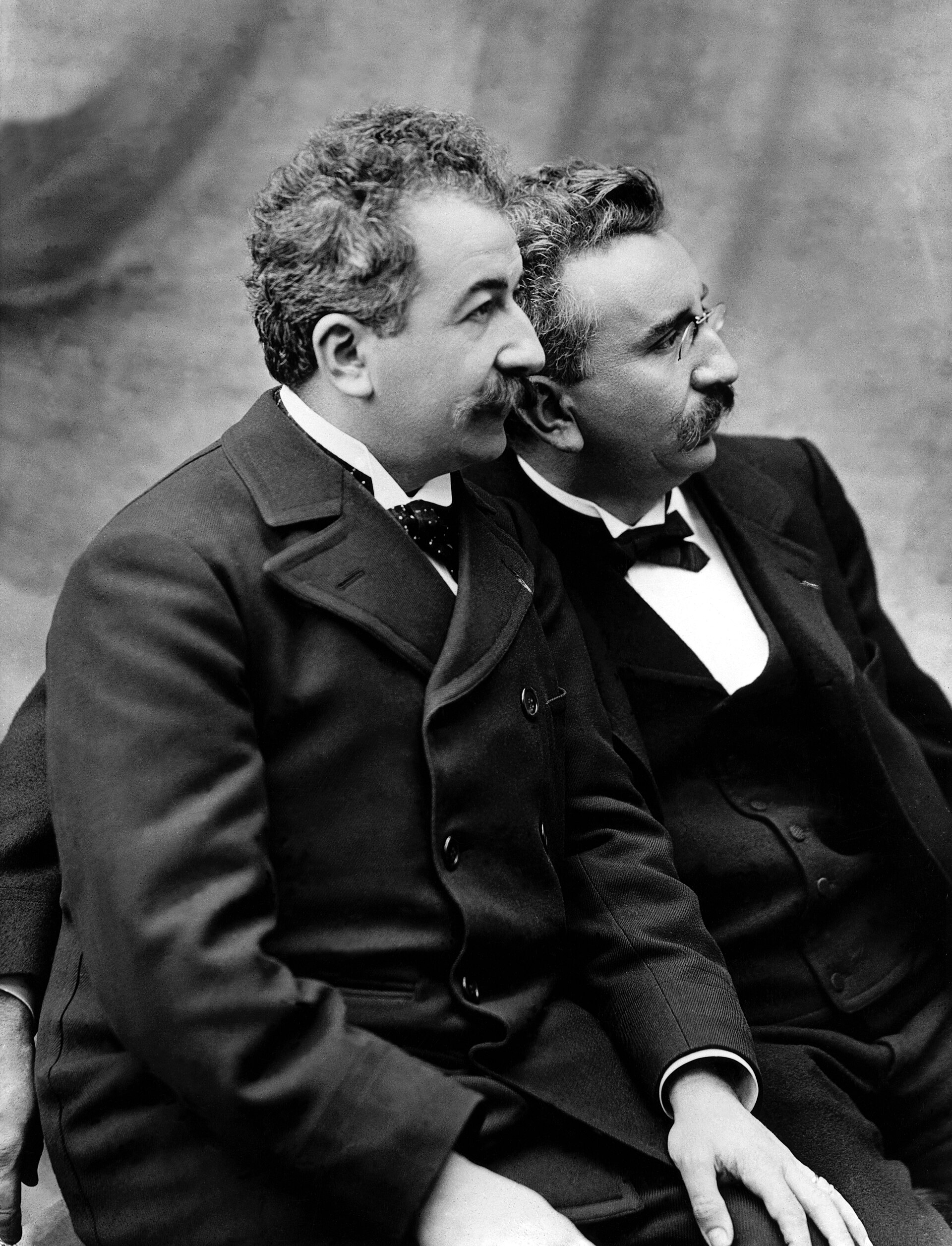
Lyon, France.
La Sortie de l'usine Lumière
The first human beings ever captured on film were ordinary people. Workers—mostly women in wide hats and long skirts—spilling out of the factory gates into the morning air. 17 meters of celluloid. 17 seconds of eternity.
00:00 — The double doors of the Lumière factory in Lyon swing open. Auguste steadies the cinematograph on its wooden tripod. The hand-crank begins to turn.
00:04 — Workers step out into the daylight, moving briskly. The cinematograph captures 16 frames every second — the precise cadence Louis calculated for flicker-free persistence of vision.
00:09 — A horse-drawn carriage emerges from the courtyard, parting the crowd. The negative film advances through the gate at exactly 16fps. Each sprocket hole holds history.
00:13 — A dog scampers across the frame, unaware. The 300 workers emerging here are the first humans ever to be captured in continuous motion. They will never fully leave this frame.
00:17 — The gates begin to close. The 17-meter reel reaches its end. The hand-crank slows. An amber light dims. The first footage ever recorded draws to a close.
The Reel Never Stops
From that single courtyard in Lyon, an infinite strip of celluloid spiraled outward, wrapping around the globe. The cinematograph wasn't just a machine; it was a new language of light and shadow, defining over a century of human memory and ensuring that those workers would never truly leave the factory.
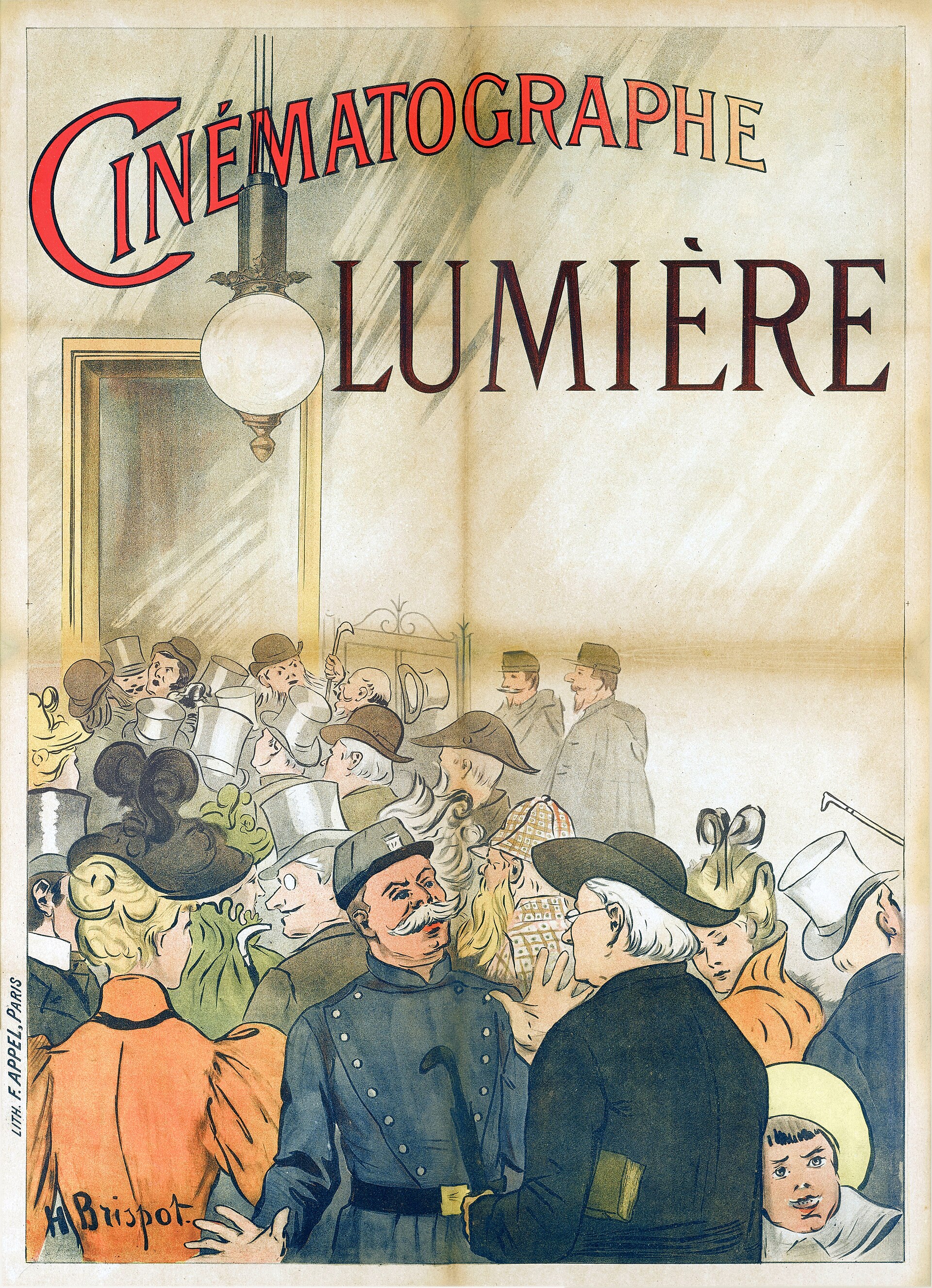
December 28, 1895.
Salon Indien du Grand Café, Paris.