The Night That Named a Revolution
The cold was bitter, the tension thick. What began as a minor dispute in the snow outside the King Street Custom House would end in a volley of musket fire, shattering the silence of the American colonies forever.
The Gathering
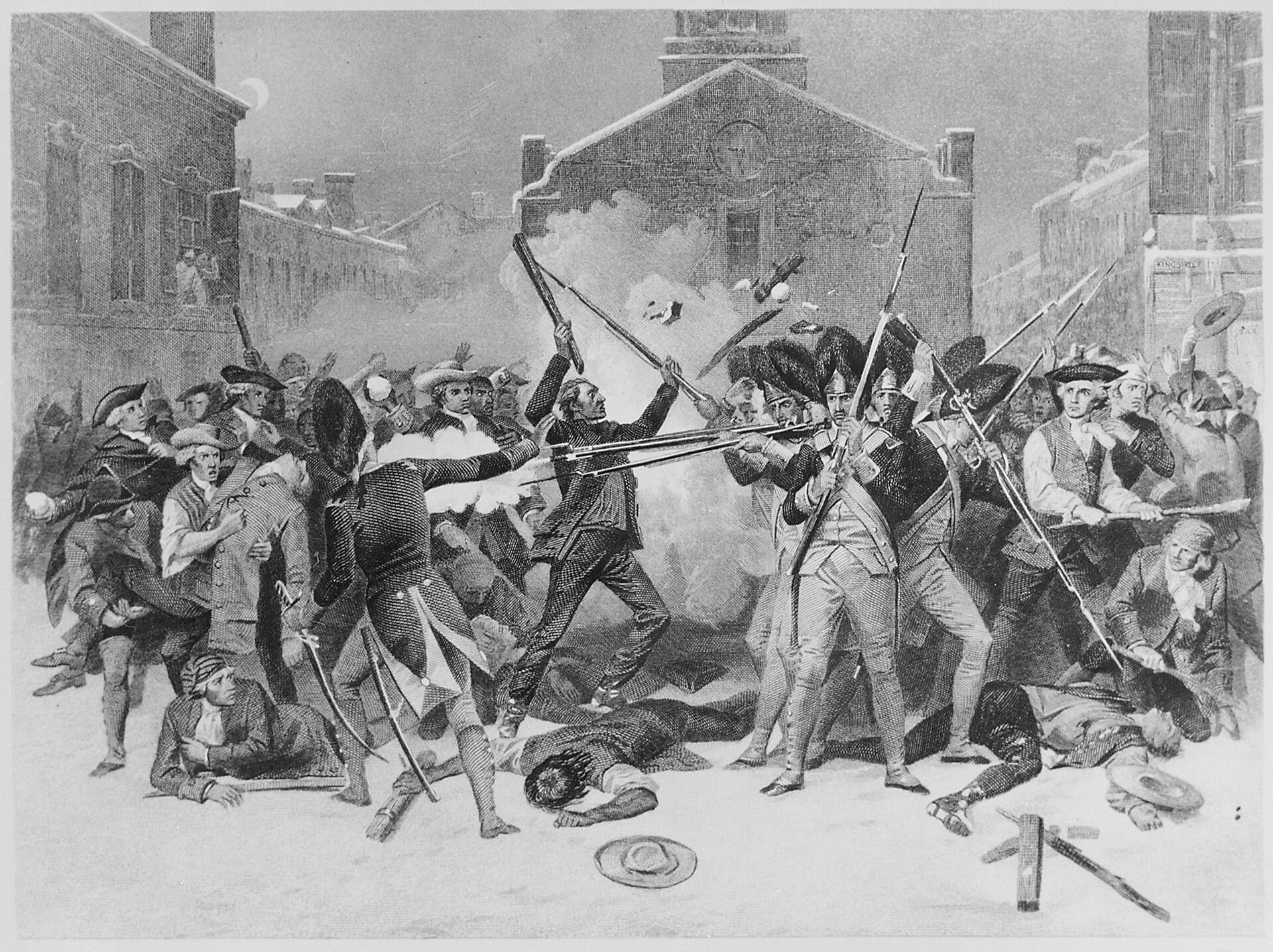
A solitary British sentry, Private Hugh White, stood guard on a freezing street corner. A young wigmaker's apprentice hurled an insult regarding an unpaid bill. White retaliated with the butt of his musket. Within minutes, the isolated confrontation metastasized. A crowd emerged from the taverns and alleys, armed with chunks of ice, oyster shells, and volatile anger. The bells of the city began to ring—not for fire, but for unrest.
The Reinforcements
Fearing for Private White's life, Captain Thomas Preston waded into the mob with a corporal and six privates of the 29th Regiment. They loaded their muskets and fixed bayonets, forming a desperate semicircle before the Custom House doors. The crowd did not retreat. Instead, they pressed closer, daring the soldiers to fire. "Fire and be damned!" someone shouted through the dark.
The Fire
In the chaotic clamor of taunts and flying ice, a club struck Private Edward Montgomery, knocking him to the ground. As he scrambled up, his musket discharged into the crowd. A brief, agonizing pause hung in the freezing air before the remaining soldiers, gripped by panic and confusion, fired a ragged volley. Five men collapsed into the bloody snow. The die was cast.
The Aftermath
By midnight, the immediate violence had ceased, but the political machinery was already violently awake. Acting Governor Thomas Hutchinson addressed the furious populace from the balcony of the State House, promising justice to avert a full-scale riot. The soldiers were arrested, but the narrative of what happened on King Street was already slipping from the hands of the Crown.
Lives Lost
They were not soldiers. They were citizens, sailors, and laborers. Their spilled blood transformed them from ordinary men into the first martyrs of a nameless revolution.
Crispus Attucks
A sailor and ropemaker of African and Native American descent. Attucks was at the front of the crowd, armed with a piece of cordwood. He took two musket balls to the chest, becoming the first casualty of the conflict.
Samuel Gray
A local ropemaker known for his fiery temperament. He was shot through the head while standing with his hands in his pockets, dying instantly in the snow.
James Caldwell
A young sailor off a coastal trading vessel. Unarmed and caught in the crossfire, Caldwell was struck by two bullets in the back as he turned away from the volley.
Samuel Maverick
A 17-year-old ivory turner's apprentice. He was standing at the back of the crowd when a ricocheting musket ball struck his abdomen. He lingered in agony until the following morning.
Patrick Carr
An Irish immigrant and leatherworker. Shot through the abdomen, he survived for two weeks. On his deathbed, he remarkably defended the soldiers, stating he had seen riots in Ireland and the troops had fired in self-defense.
The Spark of Propaganda
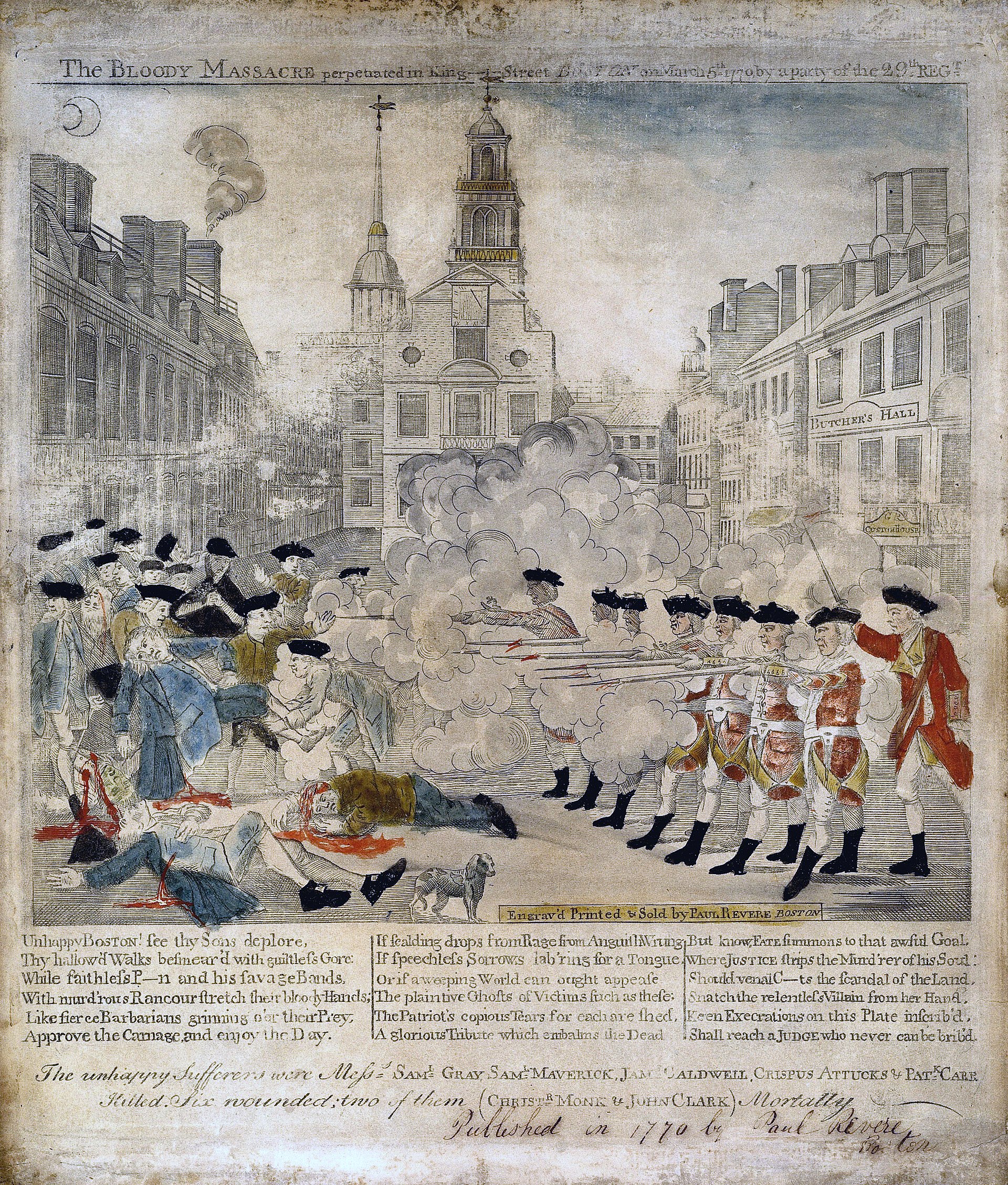
News of the bloodshed spread rapidly, weaponized by Patriots like Samuel Adams and Paul Revere. The narrative shifted instantly from a chaotic riot to an orchestrated slaughter.
The “Butcher’s Hall”
Revere deliberately renamed the Custom House to “Butcher’s Hall” in the engraving, framing the British institution as a slaughterhouse.
The Commander
Captain Preston is depicted behind his men, ordering them to fire. In reality, he stood in front of their muskets, desperately trying to prevent bloodshed.
The Volley
The soldiers are shown firing a synchronized, merciless volley. The actual firing was chaotic, ragged, and disjointed, sparked by panic rather than a command.
The Innocent Crowd
The victims are portrayed as well-dressed gentlemen passively receiving fire. Revere entirely erased the angry mob, the heavy clubs, and the barrage of ice.
The “Butcher’s Hall”
Revere deliberately renamed the Custom House to “Butcher’s Hall” in the engraving, framing the British institution as a slaughterhouse.
The Commander
Captain Preston is depicted behind his men, ordering them to fire. In reality, he stood in front of their muskets, desperately trying to prevent bloodshed.
The Volley
The soldiers are shown firing a synchronized, merciless volley. The actual firing was chaotic, ragged, and disjointed, sparked by panic rather than a command.
The Innocent Crowd
The victims are portrayed as well-dressed gentlemen passively receiving fire. Revere entirely erased the angry mob, the heavy clubs, and the barrage of ice.
Revere’s famed print, distributed widely in the weeks following the massacre, was a masterclass in visual propaganda. It inflamed the colonies, cementing the five deaths on King Street not as a tragic accident of civil unrest, but as an act of tyranny that demanded war.